
HMCS SUMMERSIDE (711)
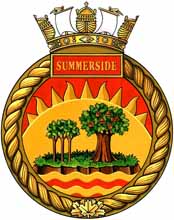
HMCS SUMMERSIDE
The History of HMCS SUMMERSIDE
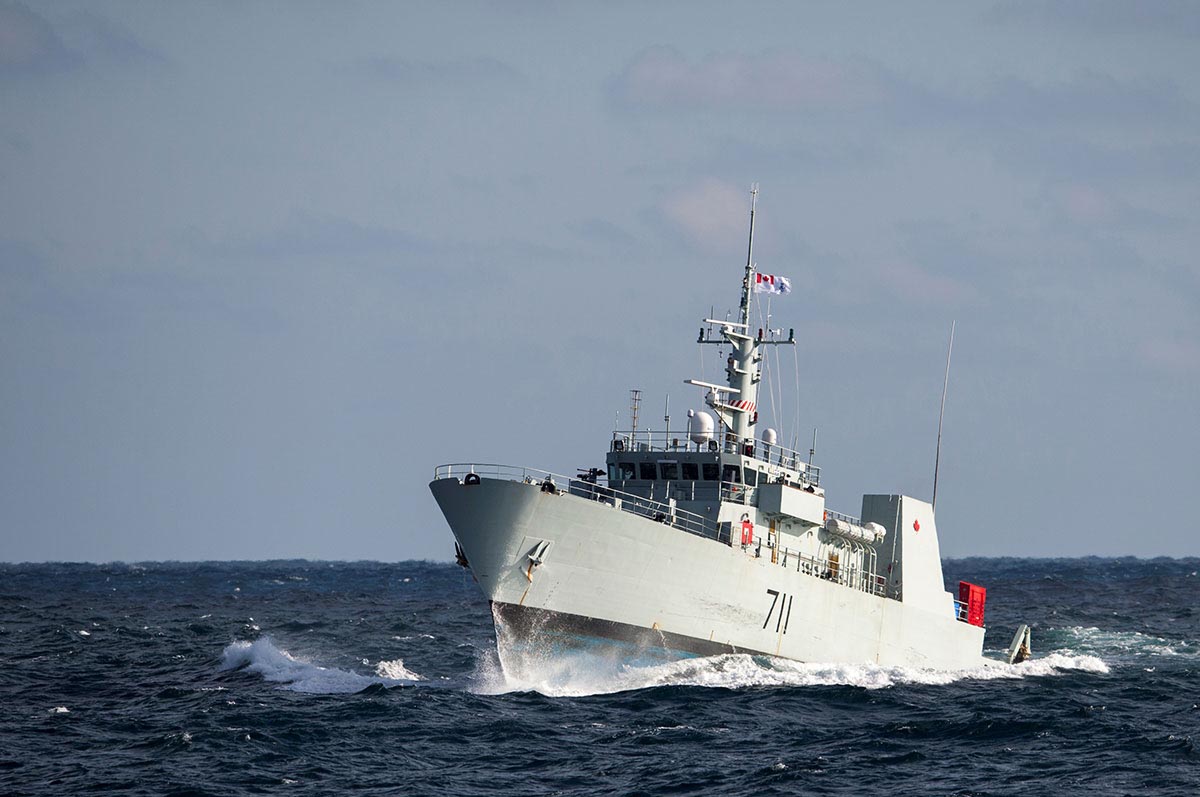
HMCS Summerside (MM 711) was the last of twelve Kingston-class Maritime Coastal Defence Vessels built for the Royal Canadian Navy. Named for Summerside, Prince Edward Island, she was the second ship to carry the name and inherited the battle honours of her Flower-class predecessor: Atlantic 1941-44, Gulf of St. Lawrence 1942 and 1944, Normandy 1944, and English Channel 1944-45.
Laid down at Halifax Shipyards on 28 March 1998 and launched that September, Summerside was commissioned in her namesake city on 18 July 1999 and based at CFB Halifax. Designed as a multi-role coastal vessel, she carried a mixed Regular and Reserve crew of about 37 and was fitted for patrol, mine countermeasures, route survey, fisheries and sovereignty work, search and rescue, and training. Modular payloads allowed her to switch roles quickly.
In her early years she conducted junior-officer training, fisheries patrols, and bottom-survey work. In 2002 she took part in Exercise Narwhal Ranger, one of the first Canadian naval ships to operate in Nunavut waters in more than a decade. Five years later she joined Operation Nanook, an Arctic sovereignty exercise supporting other government departments. She also appeared in the 2008 naval review marking Quebec City's 400th anniversary.
Later deployments took her farther afield. She participated in Caribbean training (Exercise Tradewinds), NATO exercises such as Joint Warrior, Cutlass Fury, and Trident Juncture, and repeated counter-narcotics patrols on Operation CARIBBE. In 2016 she supported a boarding that seized 324 kilograms of cocaine off Nicaragua. She twice deployed to West Africa: Neptune Trident in 2017 and Obangame Express in 2018 with HMCS Kingston, the latter visit being the first by Canadian warships to Nigeria. In December 2018, while returning from European waters with HMCS Glace Bay, she helped rescue the four crew of the disabled sailing vessel Makena.
After Russia's 2022 invasion of Ukraine, Summerside and Kingston deployed to European waters under NATO, locating and detonating leftover Second World War mines. In 2023 she returned to the North Atlantic and Baltic on Operation Reassurance for further mine-clearance work.
The Bofors 40mm guns were removed from Canada's Kingston-class coastal defence vessel (MCDV) fleet in 2014, leaving the vessels relying on two 12.7mm (0.50 caliber) Browning M2 heavy machine guns for self-defense. HMCS Summerside's former 40mm Bofors gun is now on display in front of the George R. Pearkes VC Branch No. 5 of the Royal Canadian Legion located at 340 Notre Dame Street in Summerside, Prince Edward Island.
On 24 July 2025, the Royal Canadian Navy announced that the Kingston class would begin to be paid off and retired starting in late 2025. Eight ships were to be retired in 2025, followed by one (Yellowknife) in 2026, one (Edmonton) in 2027 and the final two (Moncton and Nanaimo) in 2028.
After 26 years of service the Navy began retiring the aging Kingston class. Summerside was paid off at Halifax on 3 October 2025 alongside several of her sisters.
HMCS SUMMERSIDE Statistical Data
- Pendant: 711
- Type: Maritime Coastal Defence Vessel
- Class: Kingston
- Displacement: 970 tonnes
- Length: 55.31 m / 181.5 ft
- Width: 11.3 m / 37 ft
- Draught: 3.4 m / 11 ft
- Speed: 15 kts
- Compliment: 31-36 Officers and Crew
- Arms: 1 - 40mm Bofors (removed in 2014), 2 - 12.7 mm (.50 cal) machine gun
- Builder: Halifax Shipyards Ltd., Halifax, NS
- Keel Laid: 28-Mar-98
- Date Launched: 25-Sep-98
- Date Commissioned: 18-Jul-99
- Paid off: 03-Oct-25
More Images
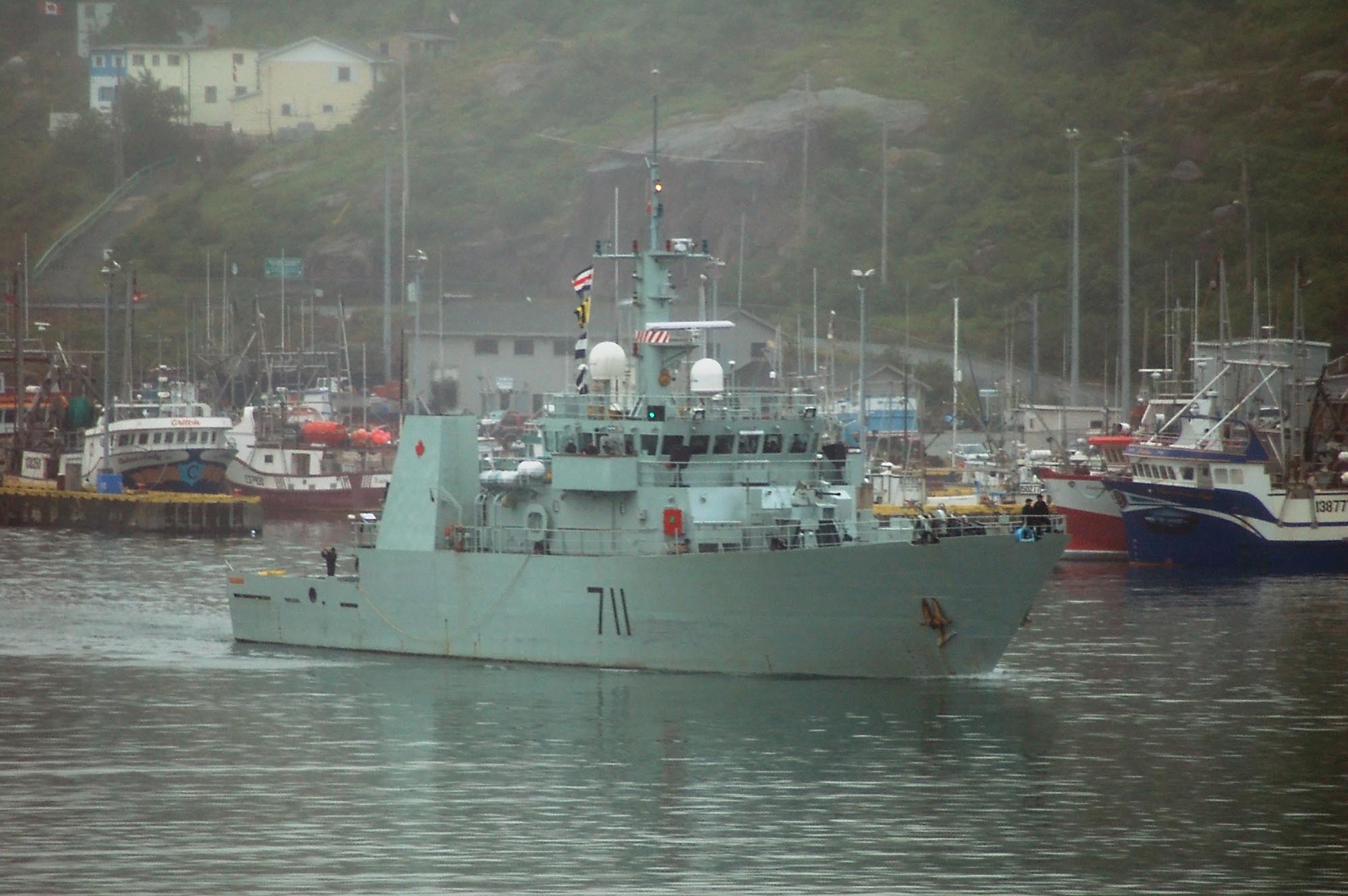
HMCS Summerside entering St John's Harbour, July 30, 2008. (Wikimedia commons user: Nilfanion)
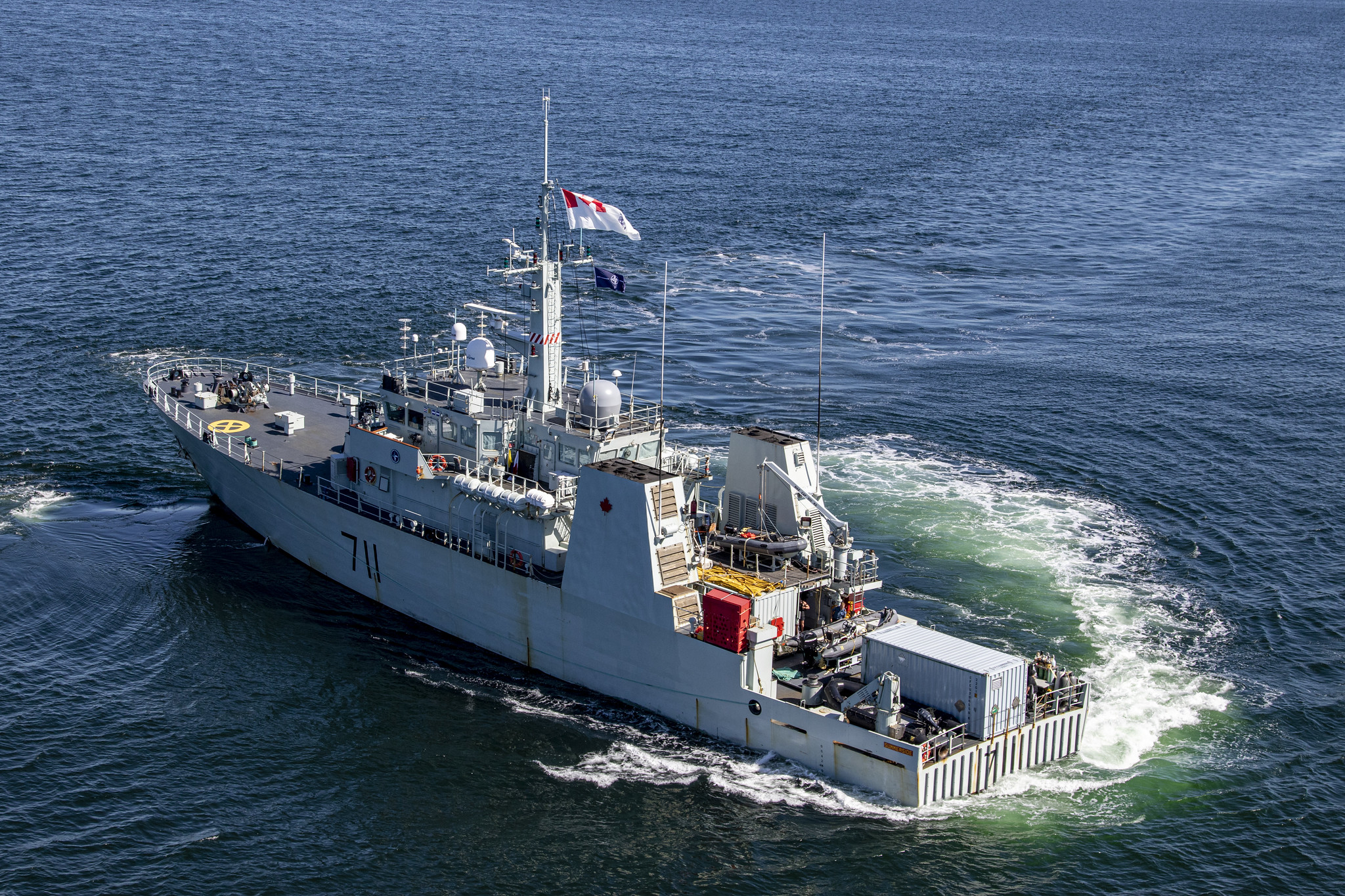
HMCS Summerside turning on the spot, June 16, 2021.