
HMCS GLACE BAY (2nd) (701)
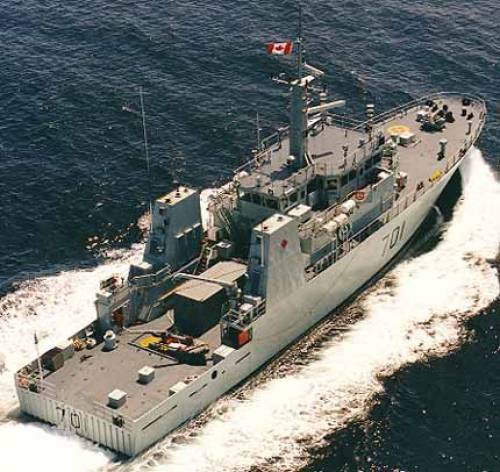
HMCS GLACE BAY (2nd)
The History of HMCS GLACE BAY (2nd)
HMCS Glace Bay (MM 701) was the second Kingston-class Maritime Coastal Defence Vessel and the second Royal Canadian Navy ship named for the Cape Breton community of Glace Bay, Nova Scotia. She inherited the battle honour Atlantic 1944-45 from the River-class frigate of the same name.
Laid down at Halifax Shipyards on 28 April 1995 and launched on 22 January 1996, she was commissioned at Sydney, Nova Scotia, on 26 October 1996 - the second ship of the twelve-ship class. Homeported at CFB Halifax and crewed largely by naval reservists, Glace Bay was built for coastal patrol, mine countermeasures, training, search and rescue, and support to other government departments.
Her career began close to home. She made an early Great Lakes deployment, then in September 1998 joined Operation Persistence after Swissair Flight 111 crashed off Peggy's Cove, helping map the wreck with side-scan sonar. In March 1999 she sailed with HMCS Kingston and Anticosti to the Baltic for NATO minesweeping exercise Blue Game - among the smallest Canadian warships to cross the Atlantic since the Second World War. Later domestic work included route surveys, officer training, RCMP sovereignty patrols, a 2004 search in Lake Ontario for remnants of the Avro Arrow, and 2009 trials of the ScanEagle unmanned aircraft.
International tasking grew over time. She joined Operation CARIBBE in 2014 and, working with the U.S. Coast Guard, seized a large cocaine shipment. She took part in NATO's Trident Juncture (2018), Operation Projection off West Africa (2020), Operation Nanook in the Arctic (2020), and patrols near Haiti in 2023. In 2018, returning from Europe with HMCS Summerside, she helped rescue the crew of the disabled yacht Makena. In 2024 she and HMCS Shawinigan served with Standing NATO Mine Countermeasures Group 1 on Operation Reassurance, hunting leftover wartime ordnance in northern European waters.
The Bofors 40mm guns were removed from Canada's Kingston-class coastal defence vessel (MCDV) fleet in 2014, leaving the vessels relying on two 12.7mm (0.50 caliber) Browning M2 heavy machine guns for self-defense.
After nearly 29 years of service, Glace Bay was paid off at Halifax on 3 October 2025 alongside several of her sisters as the Navy began to retire the Kingston class.
Small, versatile, and often crewed by reservists, she had ranged from the Great Lakes and the Arctic to the Caribbean, West Africa, and the Baltic - quietly doing the work of coastal defence and alliance support.
HMCS GLACE BAY (2nd) Statistical Data
- Pendant: 701
- Type: Maritime Coastal Defence Vessel
- Class: Kingston
- Displacement: 970 tonnes
- Length: 55.31 m / 181.5 ft
- Width: 11.3 m / 37 ft
- Draught: 3.4 m / 11 ft
- Speed: 15 kts
- Compliment: 31-36 Officers and Crew
- Arms: 1 - 40mm Bofors (removed in 2014), 2 - 12.7 mm (.50 cal) machine gun
- Builder: Halifax Shipyards Ltd., Halifax, NS
- Keel Laid: 28-Apr-95
- Date Launched: 22-Jan-96
- Date Commissioned: 26-Oct-96
- Paid off: 03-Oct-25
More Images
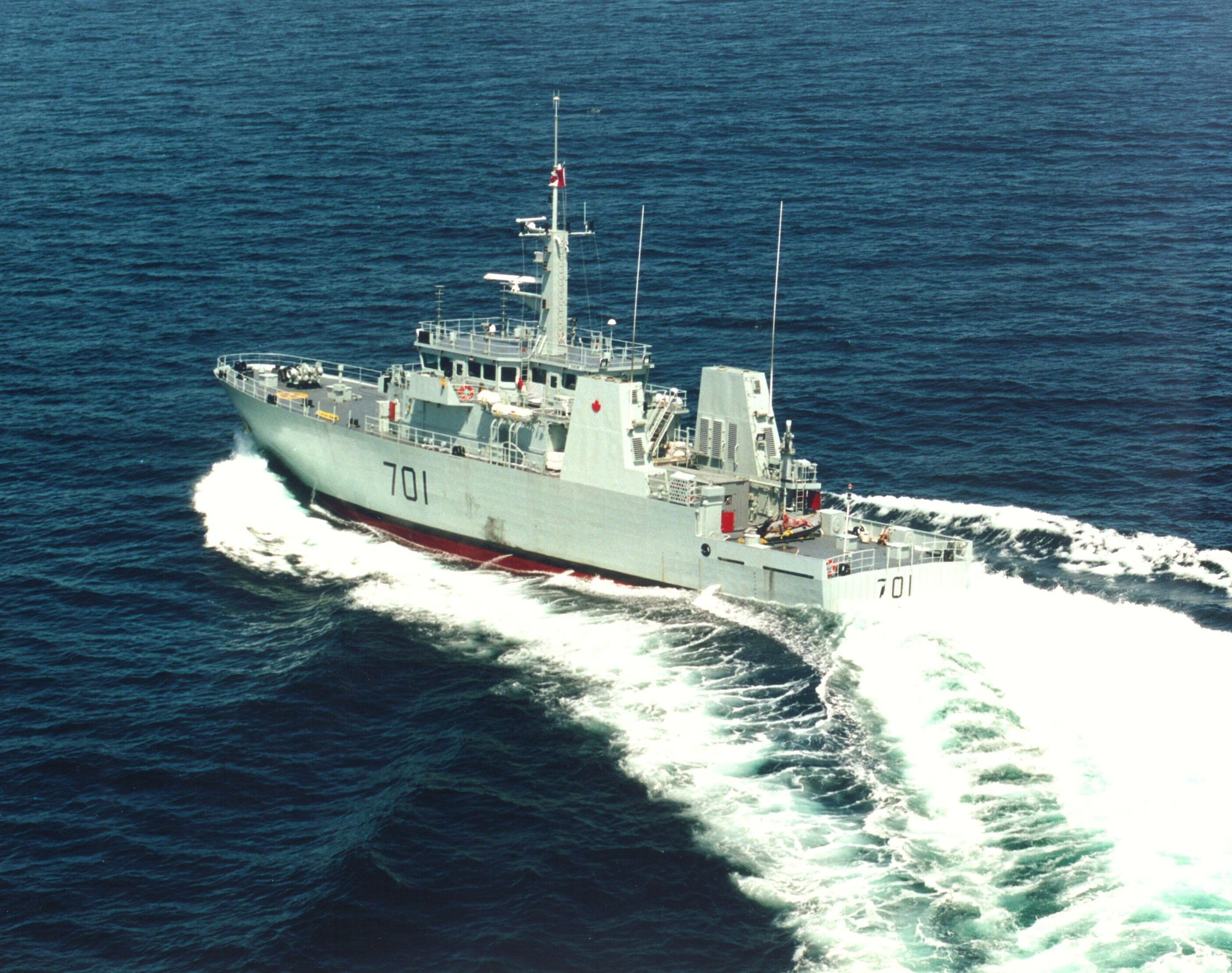
HMCS Glace Bay